Cart 0
Knowing how to organise a corporate awards ceremony well is more valuable than most people realise — until they’re the ones responsible for it. Done right, it’s one of the most powerful events an organisation can run: recognition that lands, a room full of energy, a show that moves at pace. Done badly, it’s a slow evening with technical problems and a room that never quite gets going.
Most of what makes an awards ceremony land comes down to decisions you can get right before anyone walks through the door. Here’s what to focus on.
How to choose the right venue for a corporate awards ceremony
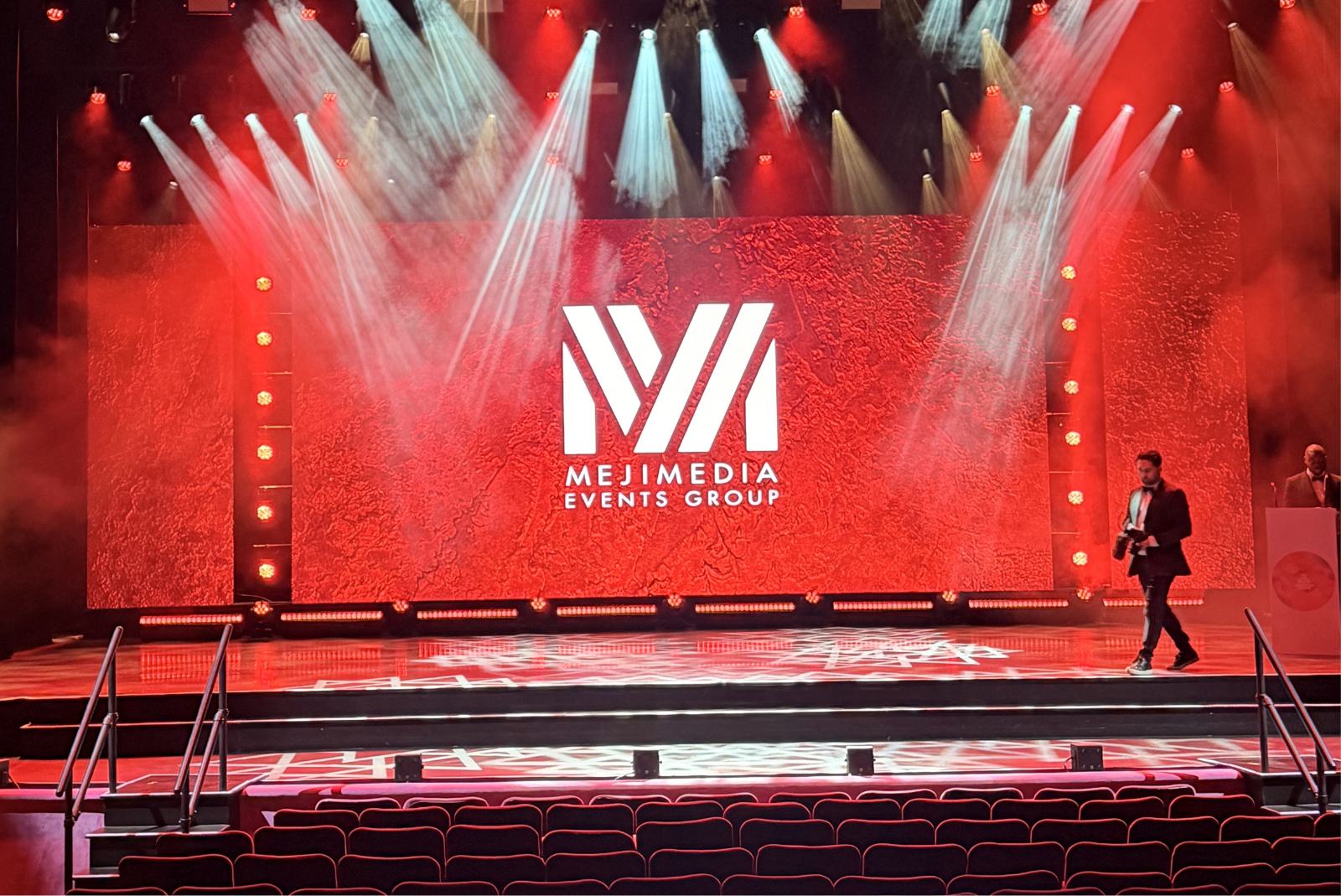
The venue sets the tone before a single word is spoken. For a formal awards ceremony, you need a space with a proper stage, enough room for a production team, and a layout that puts the stage front and centre. A hotel ballroom that works beautifully for a gala dinner can fall completely flat as an awards venue if the sightlines aren’t right or the room doesn’t have the depth for a proper AV rig.
Think about capacity honestly — not just tables and chairs, but production space, backstage access for presenters, and room for your lighting and AV setup. If you’re working with a venue for the first time, ask to see a live event in the space before you confirm. Walk the room. Stand where your guests will be sitting and look at the stage.
Iconic venues work hard for you. When we delivered the Sports Journalists’ Awards at the London Palladium, the room brought a weight and expectation from the moment guests arrived that no amount of décor can manufacture. Not every awards ceremony needs that level of venue — but the principle holds: the venue should feel proportionate to the occasion you’re asking people to show up for.
Get the production right — stage, AV, lighting
This is where most awards ceremonies either come alive or fall completely flat.
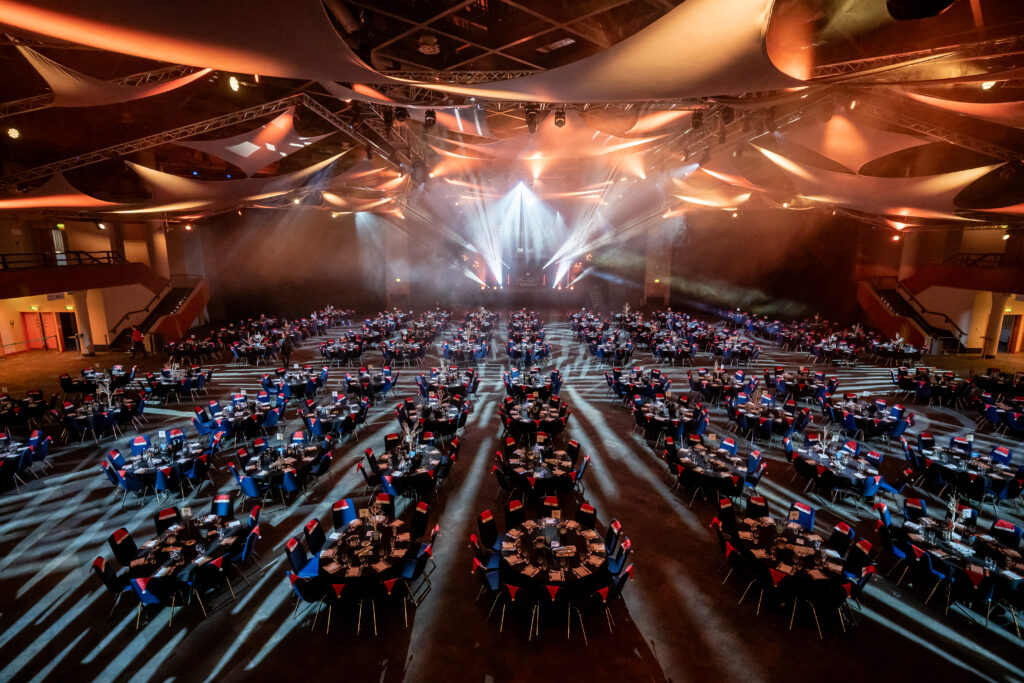
Production isn’t a nice-to-have. It’s the difference between a ceremony that feels like a proper event and one that feels like a work presentation with better catering. Your staging needs to be visible from every seat. Your microphones need to be reliable. Your lighting needs to shift — not just illuminate — so that the room actually feels like it’s responding to what’s happening on stage.
A few things to nail down early:
Sound. Every award presented, every winner announced — it needs to be heard clearly from the back row. Brief your presenters on mic technique before the evening starts and run a proper sound check before doors open.
Lighting. House lighting for the meal, a wash on the stage for presentations, a follow spot for winners walking up — these transitions should be planned and rehearsed, not improvised on the night.
Screens and content. If you’re running nominee videos, category graphics, or a sponsor reel, your AV team needs a full run-through well in advance. Content errors on screen are difficult to recover from in front of a live audience.
Contingencies. What happens if a key piece of kit fails mid-show? Your production team should have answers for everything that matters before the event starts.
Plan your show flow carefully
The show flow is the backbone of the evening — a minute-by-minute plan of exactly what happens, in what order, and who’s responsible for each element. It sounds administrative. It is. And it’s the most important document you’ll produce.
Work backwards from your end time. How many categories? How long per presentation, including the walk to the stage and the speech? Where does the entertainment sit — before dinner, mid-show, or after? Where does the meal service fit around the programme? Every unaccounted minute is a minute where the energy can drift and the room can lose interest.
Brief everyone with a role in the show — your host, presenters, AV team, and venue staff — so that the running order isn’t new information on the night. The best awards ceremonies feel effortless to the audience. That’s because everything behind them is exact.

Think about your audience experience
Your guests’ experience starts before the ceremony does. Think through the full arc of the evening: arrival drinks and registration, the journey from dinner into the awards, the energy mid-show, and what happens after the final award is given.
Small things matter more than people expect. Is there a clear running order on each table so guests know what’s coming? Do your winners know in advance, or is the reveal genuine? How are guests getting home — and is there a plan for continuing the evening somewhere?
For our awards ceremonies and gala dinners, we think about the guest experience as a complete piece — from welcome through to the end of the night. It’s what separates a well-run ceremony from one that actually makes an impression on the people in the room.
Why working with an events agency makes a difference
When you work out how to organise a corporate awards ceremony yourself for the first time, you’re solving problems that an experienced agency has already solved dozens of times over — at different venues, for different audiences, at different scales.
When the Sports Journalists’ Association wanted to move away from a traditional dinner format, we produced an Oscars-style awards ceremony for them at the London Palladium (read the case study). If you’re planning your own, take a look at our awards ceremony management service.
The value isn’t just logistics. It’s the fact that they know what goes wrong, and they know how to stop it happening. When we delivered the Sports Journalists’ Awards at the London Palladium, the brief was to take a traditional black-tie format and reimagine it as something that felt like a proper televised ceremony — tight, high-energy, and worthy of a room that has hosted some of the world’s great performers. That kind of brief requires creative and operational confidence in equal measure.
Working with an agency also means you can be present at your own event, not running it. That’s a meaningful difference — for you and for your guests.
Planning an awards ceremony? Contact us today→